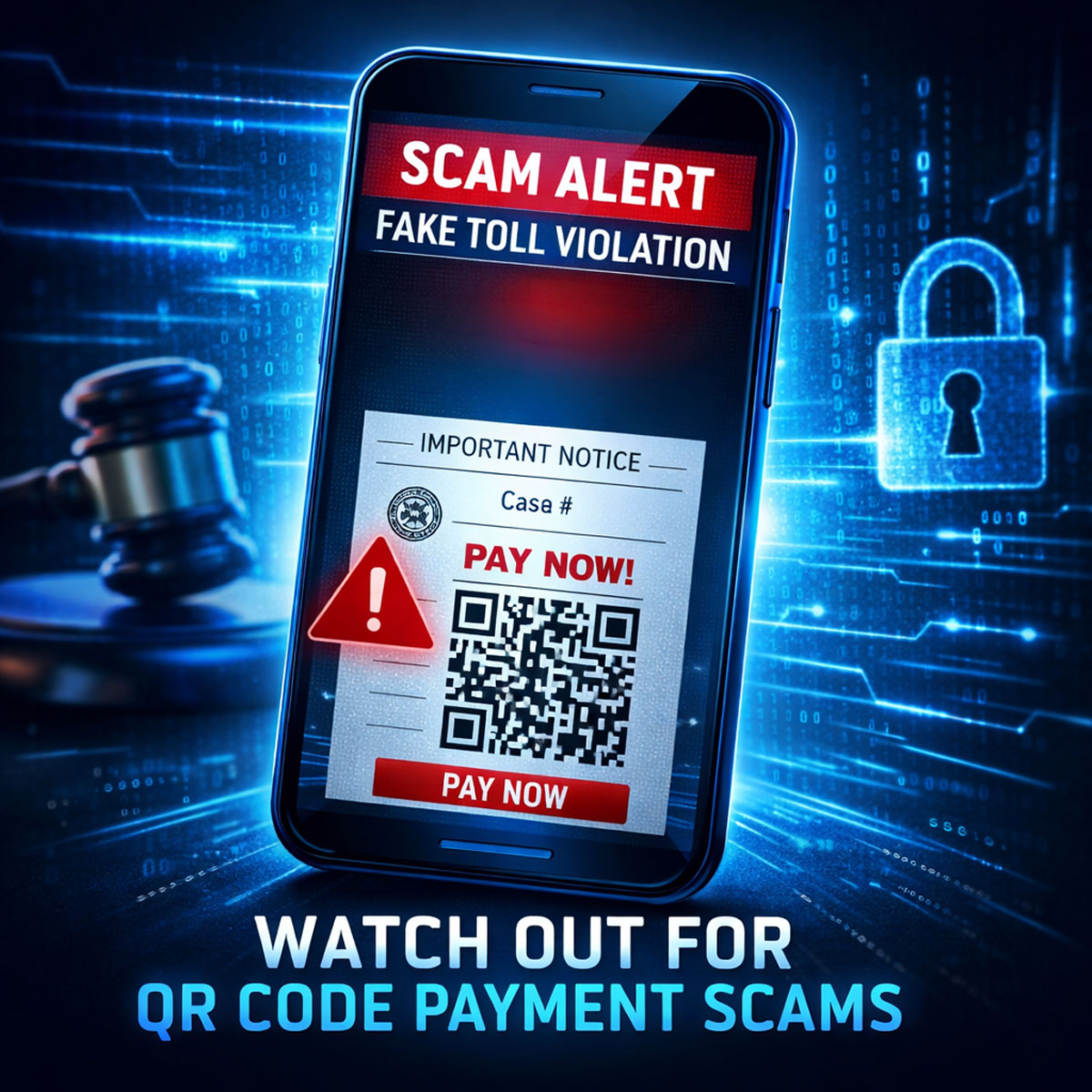
Beware of Fake Toll Violation Text Messages
Cybercriminals are constantly evolving their tactics to trick people into giving up sensitive information. One of the latest scams circulating involves fake toll violation notices sent by text message.
At first glance, the message looks convincing. It claims you have an unpaid traffic toll that must be paid immediately. The text often includes an image that appears to be an official court summons, complete with a court seal, case number, and a QR code.
The message warns that if you don’t pay the fine right away, you could face serious consequences — even arrest.
But the goal isn’t to collect a toll.
It’s to steal your financial information.
How the Scam Works
In this scam, victims receive a text message claiming they have an unpaid toll violation. The message often includes:
- An image that appears to be an official court document
- A case number or government seal
- A QR code to quickly “pay the fine”
The message typically creates a sense of urgency, warning that legal action may be taken if payment isn’t made immediately.
However, the QR code doesn’t lead to a legitimate government website. Instead, it directs victims to a fraudulent payment page designed to capture financial information.
Once entered, scammers may collect credit card details, personal information, or other sensitive data.
This type of attack works because it pressures people to act quickly without verifying the message.
The Rise of QR Code Scams
QR codes have become a common part of everyday life — used for restaurant menus, payments, event tickets, and more.
Unfortunately, cybercriminals are now taking advantage of that convenience.
Security experts have begun referring to these attacks as “quishing”, or QR code phishing. Instead of clicking a malicious link, victims scan a QR code that sends them directly to a fraudulent website.
Because many people trust QR codes, these scams can be particularly effective.
The Human Element in Cybersecurity
Many modern cyberattacks no longer focus on breaking through technical defenses like firewalls or antivirus systems.
Instead, attackers focus on people.
Through tactics such as phishing emails, fraudulent text messages, and impersonation attempts, cybercriminals try to manipulate individuals into giving them access.
In many organizations today, the human element has become the new security perimeter.
If an attacker can convince someone to click a link, scan a code, or share login credentials, they may be able to bypass traditional security tools entirely.
“ In today’s threat landscape, cybercriminals often target people instead of systems. One convincing message or QR code can bypass even strong security tools. “
How to Protect Yourself from Toll Text Scams
If you receive a suspicious message about an unpaid toll or legal notice, keep these tips in mind:
- Be cautious of legal notices sent by text
Courts and government agencies typically send official notices by mail or certified delivery, not unsolicited text messages. - Treat QR codes like links
Scanning a QR code can send you to a malicious website just as easily as clicking a suspicious link. - Verify independently
If you believe you may have missed a toll payment or received a ticket, look up the official website or phone number for your local toll agency or court and contact them directly. - Pause before responding
Scammers rely on urgency and fear to pressure victims into acting quickly. Taking a moment to verify a message can prevent costly mistakes.
Awareness Is One of the Best Defenses
At Citynet, we believe that awareness is one of the most powerful cybersecurity tools available. Staying informed about the latest scams can help you and your organization avoid becoming the next victim.
For businesses, employee education plays a critical role in reducing cyber risk. Citynet helps organizations strengthen their defenses with KnowBe4 security awareness training, which teaches employees how to recognize phishing attempts, social engineering tactics, and other modern cyber threats before they cause damage.
When employees know what to watch for, they become one of the strongest defenses an organization can have.
Frequently Asked Questions About Toll Text Scams
- Are toll violation text messages legitimate?
Most toll agencies and courts do not send payment requests by text message. If you receive a text claiming you owe a toll and it asks you to click a link or scan a QR code to pay immediately, it may be a scam. - What happens if you scan a malicious QR code?
Scanning a malicious QR code can redirect you to a fraudulent website designed to collect personal or financial information. In some cases, the site may also attempt to install malware on your device. - How can you verify a toll violation notice?
If you believe you may have missed a toll payment, visit the official website of the toll authority or contact them using the phone number listed on their official site. Never rely on contact information included in suspicious messages. - Why do scammers use QR codes?
QR codes are convenient and widely trusted. Cybercriminals use them because they can hide malicious links and bypass some email or text security filters.