
It’s usually not a sophisticated hack — it’s a moment of trust.
Many organizations imagine cyberattacks as highly technical breaches targeting servers or networks.
In reality, most cyber incidents begin with something much simpler: a human mistake or a moment of trust.
Cybercriminals increasingly focus on manipulating employees rather than breaking through technical defenses.
Here are some of the most common ways attacks begin.
4 Common Ways Cyberattacks Begin
1. Phishing Emails
Phishing remains one of the most common ways attackers gain access to business systems.
A carefully crafted email may appear to come from a trusted source such as:
- A vendor
- A bank
- A shipping company
- A coworker or executive
These messages often contain malicious links or attachments designed to steal login credentials or install malware.
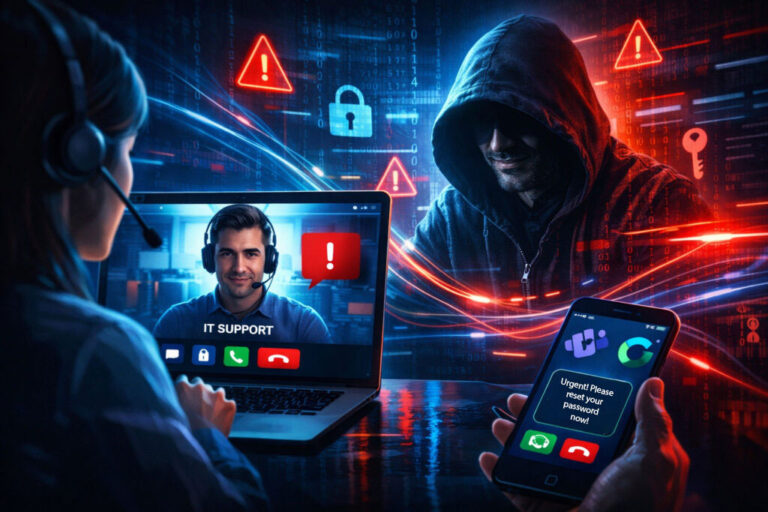
2. Social Engineering Phone Calls
Cybercriminals are increasingly targeting employees directly by phone or collaboration platforms.
Attackers may impersonate:
- IT support staff
- Company executives
- Vendors requesting payment updates
- Financial institutions
Their goal is to convince employees to reveal passwords, approve MFA prompts, or transfer money.
3. Compromised Credentials
If attackers obtain a password through phishing, password reuse, or data breaches, they may gain direct access to systems such as:
- Microsoft 365
- Business email accounts
- VPN connections
- Cloud applications
Once inside, attackers often attempt to escalate privileges and move deeper into the network.
4. Fake Invoices or Payment Requests
Finance departments are frequent targets for cybercriminals.
Attackers may send fraudulent invoices or request changes to payment instructions, hoping employees will process payments before realizing the request is fake.
These scams can result in significant financial losses for businesses.
Your Employees Are the First Line of Defense
Because many cyberattacks begin with human interaction, employee awareness is one of the most effective cybersecurity defenses available.
Organizations that educate employees about modern threats significantly reduce the likelihood of successful attacks.
Citynet helps businesses strengthen their defenses through:
- Security awareness training for employees
- Simulated phishing exercises
- Proactive monitoring and threat detection
- Managed cybersecurity services
An informed workforce can stop many cyberattacks before they reach your network.
Stop Cyberattacks Before They Reach Your Network
Many cyber incidents begin long before attackers reach company systems.
They start with phishing emails, social engineering calls, or stolen credentials that allow attackers to gain a foothold inside an organization.
Preventing these attacks requires a layered cybersecurity approach that includes employee training, proactive monitoring, and strong security controls.
Citynet helps businesses reduce cyber risk with solutions such as:
- Security awareness training and simulated phishing exercises
- Managed endpoint protection and threat detection
- Multi-factor authentication and identity protection
- Network monitoring and cybersecurity services
By combining technology with employee awareness, organizations can stop many cyberattacks before they cause damage.
Concerned About Your Organization’s Cyber Risk?
Cyber threats continue to evolve, and many attacks target small and mid-sized businesses that lack dedicated security teams.
Citynet’s managed cybersecurity services help organizations monitor, detect, and respond to threats before they disrupt operations.
Further Reading
Learn more about recognizing cyber threats and responding to security incidents.