
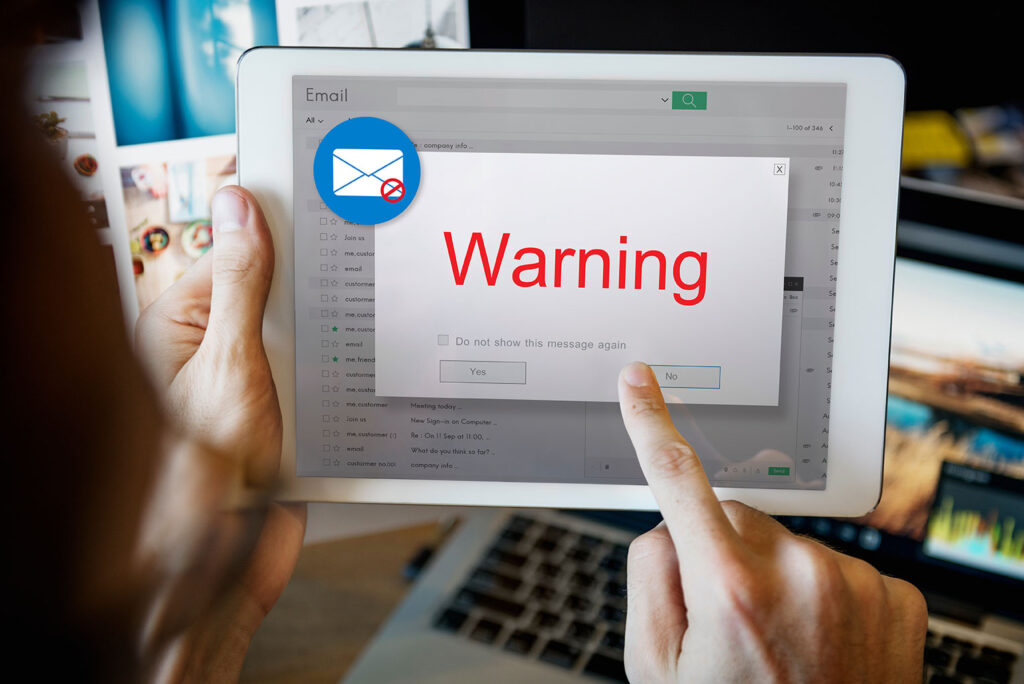
How to Handle Suspicious Emails

Email Scams Image

Learning how to handle suspicious emails is essential to keep your organization safe from cybercriminals. If you don’t correctly handle a suspicious email, you could fall victim to a phishing attack.

Follow the tips below to make sure you correctly handle suspicious emails:

Don’t Reply to the Email

If you receive a suspicious email that appears to come from someone you know, you may be tempted to reply to the email to learn more. However, if you reply to the email, you may increase the security risk. If an email account has been compromised, the person who replies back to you probably won’t be who you expect. You could actually be communicating with a cybercriminal.

Don’t Forward the Email

The best practice is to never click a link or open an attachment that you were not expecting. However, if you are fooled by a phishing email and you click a malicious link or open a malicious attachment, you may find that the link or attachment will not behave as expected. For example, if you open a suspicious image attachment, the file may actually open an installation window. Or, if you click a malicious link, the link may redirect you to a fake login page.

If the link or attachment is suspicious, you may think about forwarding the email to a coworker for help. However, forwarding the email to a coworker could increase the risk. If you click on a link or open an attachment, consider any unusual behavior as a red flag. Never forward unusual or suspicious emails to other users. If you forward a phishing email, you increase the risk of a security breach because your coworker may click the phishing link as well.

Don’t Mark the Email as Spam

Spam emails are typically unwanted advertisements. While spam emails may be annoying, they are usually harmless. However, a phishing attack is a malicious email designed to look like a legitimate message. Phishing emails typically include a call to action, such as clicking a link, opening an attachment, or even transferring money.

If you mark a suspicious email as spam, the email will be moved to a different folder along with any other emails from the same sender. So, if you move the suspicious email to a spam folder, the email will be hidden. However, the problem will not be resolved.

Tips to Stay Safe

The best way to handle a suspicious email is to report the email to your organization. If you report the email, your IT team can assess and mitigate the threat.

When you receive a suspicious email, follow the tips below to stay safe:

  • Be sure to follow your organization’s process for reporting suspicious emails. Following cybersecurity protocols will help keep everyone’s information safe.
  • If you don’t know how to report the email, leave the email in your inbox and ask a manager or supervisor for help.

If you’re not sure whether an email is spam or a phishing attack, report the email and your IT team handle the situation.



Knowbe4 Logo

Stop, Look, and Think. Don’t be fooled.
Like This Post?

Facebook
X
LinkedIn
Pinterest

More Posts

Ticket Scam QR Image
Cybersecurity

You’ve Been Served… a Scam!

Beware of Fake Toll Violation Text Messages Cybercriminals are constantly evolving their tactics to trick people into giving up sensitive information. One of the latest scams circulating involves fake toll violation notices sent by text message. At first glance, the message looks convincing. It claims you have an unpaid traffic toll that must be paid immediately. The text often includes

Blog Cybercrime Calling Image
Cybersecurity

Cybercriminals Are Now Calling Your Employees

Is Your Business Prepared? Cyber threats are evolving, and one of the fastest-growing tactics right now is social engineering through trusted communication platforms. Instead of trying to hack their way in, cybercriminals are increasingly talking their way in. Attackers are impersonating IT staff, executives, vendors, and even coworkers via phone calls and collaboration tools such as Microsoft Teams, Webex, and other messaging

Laptop Typing With Icons Image
Cybersecurity

Shadow IT: The Apps Your Employees Use That IT Doesn’t Know About

When most businesses think about cybersecurity risk, they picture hackers breaking in from the outside. But one of the fastest-growing risks isn’t external at all. It’s happening inside your organization…quietly, unintentionally, and often with good intentions. It’s called Shadow IT. And it’s growing faster than most businesses realize. What Is Shadow IT? Shadow IT refers to any software, app, cloud platform,

Teamwork People Tablet Image
Cybersecurity

The New Employee Is Your Biggest Security Risk

(And It’s Not Their Fault) When businesses think about cybersecurity risk, they often picture hackers, ransomware, or sophisticated phishing attacks. But one of the most common — and overlooked — security risks starts on day one: A new employee. Not because they’re careless.Not because they’re malicious.But because onboarding and offboarding processes often leave dangerous gaps. If those gaps aren’t managed

Umbrella Covering Laptop Cybersecurity Image
Cybersecurity

The New Reality of Cyber Insurance Requirements for Small Businesses

Cyber insurance used to feel like a safety net. Today, it’s starting to feel more like an application for a mortgage. Across the country, insurance providers are tightening requirements, raising premiums, and even denying claims when businesses don’t meet modern cybersecurity standards. Many small and mid-sized organizations are discovering this shift the hard way, during policy renewal or after filing

Citynet Red Siege Webinar Post Image
Cybersecurity

Citynet and Red Siege Webinar Inside the Attacker’s Playbook

Cybersecurity isn’t just about defense — it’s about understanding how real attackers think. Join Citynet’s Craig Behr and Red Siege’s Tim Medin for an upcoming webinar, Inside the Attacker’s Playbook, where we’ll break down how real-world offensive operations uncover gaps — and how organizations can use those insights to reduce cyber risk before it becomes a business problem. Play Video

SuperPod with WiFi 6E

Plume SuperPod WiFi 6E Specs

SuperPod with WiFi 6

Plume SuperPod WiFi 6 Specs

SuperPod

Plume SuperPod Secs