
Technology changes fast, and so does the language that comes with it. Whether you’re talking about internet speeds, cybersecurity tools, or the latest Wi-Fi standards, new acronyms and buzzwords pop up all the time.
To help you stay in the know, here’s your plain-English guide to the top tech terms you might hear in 2025, plus real-world examples where it helps to make them click.
Broadband & Connectivity
Fiber – High-speed internet delivered via fiber-optic cables, offering faster and more reliable service than cable or DSL.
Example: Citynet’s fiber internet service delivering up to 10 GIG symmetrical speeds.
Symmetrical Speeds – Upload and download speeds that are the same — ideal for video calls, file uploads, and streaming.
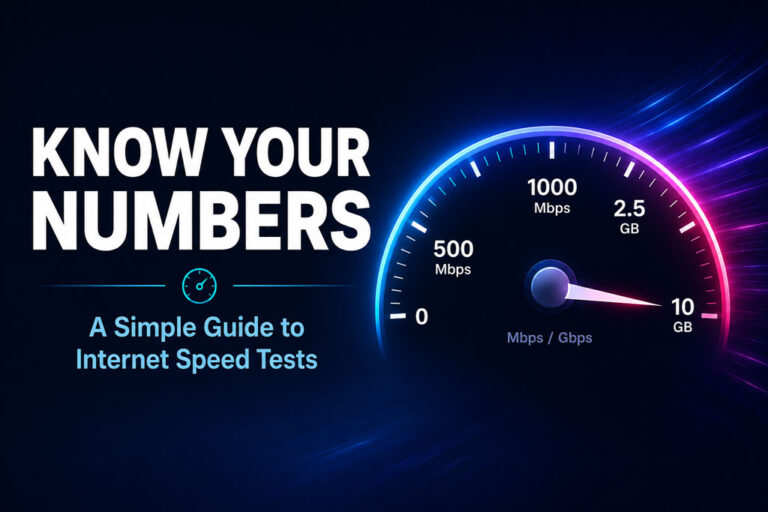
Mbps – Megabits per second, a measure of internet speed.
Example: 1,000 Mbps = 1 GIG speed.
GIG – Short for gigabit, equal to 1,000 Mbps.
BEAD – Broadband Equity, Access, and Deployment Program, a federal funding initiative to expand high-speed internet in underserved areas.
Middle Mile – The network infrastructure that connects local access points (like neighborhoods) to the broader internet backbone.
Latency – The delay between sending and receiving data, important for gaming and video conferencing.
Wi-Fi & Networking
SSID – Service Set Identifier, your network’s public name.
Router – The device that sends internet signals throughout your home or business.
Mesh Wi-Fi – A system of multiple access points that provides stronger, more consistent coverage.
Example: Citynet’s mesh-capable routers paired with the Intellifi app.
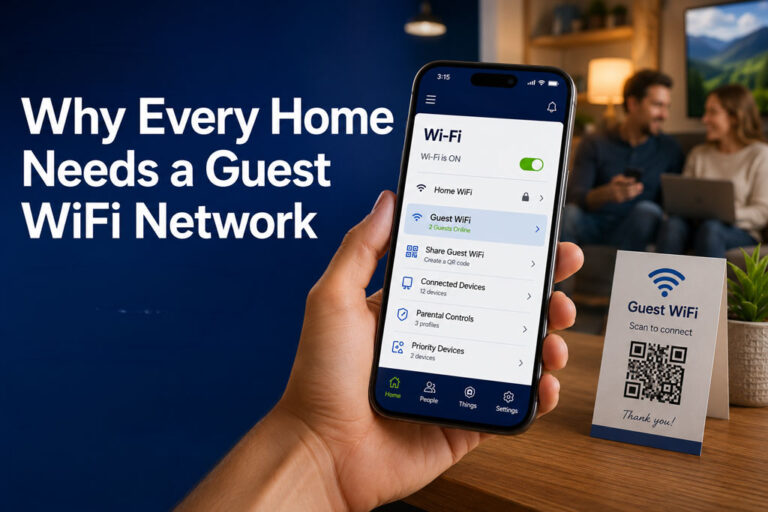
Intellifi App – Citynet’s network control app that lets you manage devices, set parental controls, run speed tests, and more — all from your phone.
SSID Broadcast – Whether your Wi-Fi network name is visible to others.
Wi-Fi 6 / Wi-Fi 7 – The latest Wi-Fi standards offering faster speeds, lower latency, and better device handling.
Example: Wi-Fi 7 supports multi-gigabit speeds to handle dozens of connected devices simultaneously.
SecurityTech
Phishing – A scam where attackers trick you into sharing personal information by pretending to be a trusted source.
Smishing – Phishing via text message (SMS).
Example: A text claiming to be from Amazon offering a refund if you click a link.
MFA – Multi-Factor Authentication, a security step requiring more than just a password to log in.
Example: Logging in with a password and a code sent to your phone.
VPN – Virtual Private Network, which encrypts your internet connection for privacy.
Example: Using a VPN to securely connect to your work network while traveling.
Ransomware – Malicious software that locks your files until you pay a ransom.
Example: The 2021 Colonial Pipeline cyberattack.
Zero Trust – A security model that assumes no user or device is trusted by default, even inside a network.
Deepfake – AI-generated audio, video, or images that convincingly mimic real people.
Social Engineering – Manipulating people into giving up confidential information.
Example: A caller pretending to be from IT asking for your login credentials.
Business Tech
VoIP – Voice over Internet Protocol, a phone service that runs over your internet connection.
Example: Citynet Business VoIP, Zoom Phone, RingCentral.
SaaS – Software as a Service, cloud-based applications you can use without installing software locally.
Popular Examples: Microsoft 365, Google Workspace, Zoom, Dropbox.
PaaS/IaaS – Platform as a Service / Infrastructure as a Service, cloud solutions for developers and businesses.
Popular Examples: Amazon Web Services (AWS), Microsoft Azure, Google Cloud Platform (GCP), Heroku.
IoT – Internet of Things, everyday objects connected to the internet, like smart thermostats or security cameras.
Example: Ring doorbells, Nest thermostats, connected refrigerators.
UCaaS – Unified Communications as a Service, a cloud platform that integrates phone, messaging, and video conferencing.
Popular Examples: Webex, Microsoft Teams, RingCentral, Zoom Phone.
Edge Computing – Processing data closer to where it’s generated instead of relying solely on a central data center.
Example: Smart traffic lights analyzing vehicle flow locally to reduce delays.
Tech terms will keep evolving, but knowing the basics helps you make informed decisions, ask the right questions, and stay secure online.
At Citynet, we’re here to make technology work for you. Whether it’s delivering fiber internet, improving network performance, or providing cybersecurity solutions, we help you stay connected, informed, and protected.