Build a New Home with Connectivity in Mind 

Build New Home Image

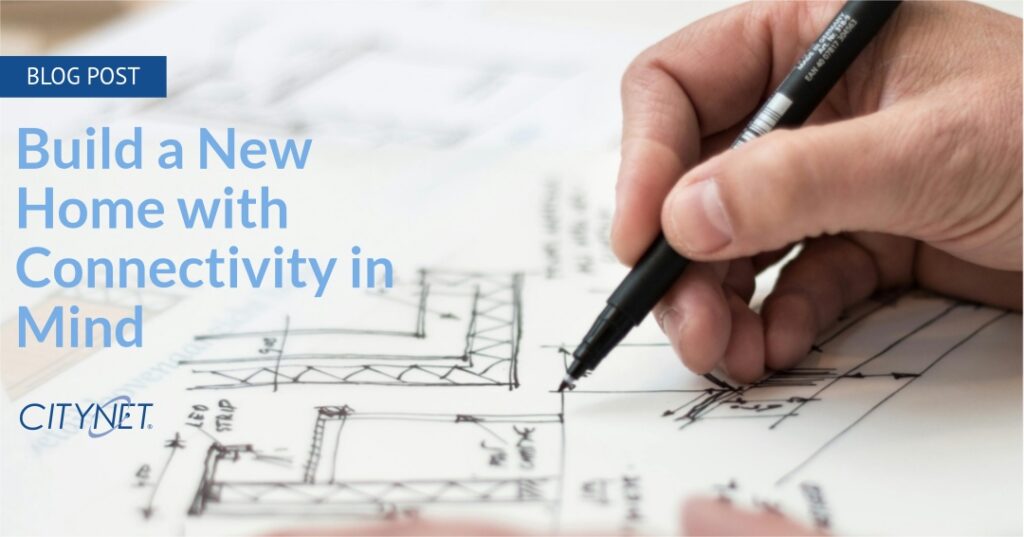
When you build a home, you make plans for plumbing, electrical, and insulation. Why not also plan for internet connectivity?

With the average household now using dozens of connected smart home tech such as TVs, phones, computers, and even vacuum cleaners, connectivity is no longer optional. Planning ahead to include connectivity in your construction designs will save you money and can even increase home value.

Smart Tips for Building a Fiber-Ready Home

1. Fiber Is the Future

Fiber internet is the gold standard for speed, reliability, and future-proof performance. If you’re early enough in your home-building process that you don’t have property purchased yet, CITYNET can help you make sure you’re shopping in a fiber-served area. After all, your new home deserves the best internet in the region.

Already purchased your property? Give us a call at 304.848.5400 or 1.844.CITYNET. We’ll check now to see if fiber internet from CITYNET is available in your area. If so, we’ll be able to go ahead and start your order so everything is in our system when you’re ready to turn on your electricity, water, and other utilities.

2. Plan for a Central Network Hub (a.k.a. Data Closet)

Having a dedicated space for your network equipment will be a huge benefit in hiding your equipment while also ensuring solid connectivity throughout your home. Designate a centrally located utility room, hallway closet, or finished space for your networking equipment. Think of it like a central nervous system for your home’s connectivity.

This space should include:

  • Several power outlets (for routers, switches, battery back-ups, etc.)
  • Ventilation or passive airflow (these devices generate heat)
  • Space for ONT (optical network terminal), router, and battery backup unit (BBU), all at working level, not on the floor or mounted to the ceiling
  • Conduit access to attic or crawlspace for future expansion
Avoid locating your data closet near your electrical panel, HVAC system, or water heater, as these can interfere with wireless signals.

3. Install Ethernet Ports in Every Room

Even with strong WiFi, wired connections are faster, more secure, and more reliable, especially for bandwidth-heavy tasks. Hardwiring Ethernet (Cat6 or higher) in key rooms such as bedrooms, offices, living/family room, and even the kitchen improves speed, reliability, and your overall online experience.

4. Add Wiring for Future WiFi Extenders or Access Points

As our technology usages changes, you may find that you need WiFi coverage in places you never imagined you would need it. Adding wiring for future WiFi extenders and access points helps ensure full-home WiFi coverage, even if you don’t need it right now. This is also ideal for multi-level houses or properties with thick walls where WiFi struggles to reach.

5. Wiring for Modern Home Tech

When planning out your future home connectivity needs, think beyond the internet. What kind of technology could be useful, either now or down the road? Consider prewiring for:

  • Security cameras and smart locks
  • Smart thermostats
  • Doorbell cameras
  • Media rooms or surround sound systems
Research smart home tech and see what might sound interesting to you. Don’t have it in the budget to install a smart security system just yet? Add wiring at all four corners and on all entrances. You’ll be saving money in the long run since adding that later will cost more and may require cutting into walls.

6. Whole-Home Surge Protection

Consider adding a surge protector at your breaker box and at individual outlets near your networking gear. Protecting sensitive electronics (router, ONT, PCs, TVs) from power surges is a smart add-on that could save you the stress and unexpected cost of replacing them after an unexpected power outage.

7. Battery Backup Unit (BBU)

Speaking of power outages, many fiber installations include a BBU for phone service, but it’s helpful to have one for your router, too. A BBU keeps critical systems (internet, smart security) online during short power outages. Also consider installing a UPS (uninterruptible power supply) in your data closet to ensure everything stays online, all the time.

The Long-Term Payoff: Adding Value to Your Home

Modern buyers increasingly prioritize reliable internet, especially with the rise in remote/hybrid work. A 2023 study showed that fiber-delivered internet access could increase a home’s value by almost 5%. A home that has access to fiber internet AND that is wired for whole-home coverage can be more appealing and may further increase resale value.

Know someone else considering building? Share this post with them!

Like This Post?

Facebook
X
LinkedIn
Email

More Posts

Speed Test Blog Image
Technology

Know Your Numbers: A Simple Guide to Internet Speed Tests

Nothing is more frustrating than being in the middle of a video call and experiencing choppy, pixelated picture or audio. Or, if you’re trying to update your computer or gaming system, and that download loading bar is barely headed toward

Guest Wi-Fi Blog Image
Technology

Why Every Home Needs a Guest WiFi Network

Most people think of WiFi as a single network. A friend visits, asks for the password, and you share it without much thought. What many people don’t realize is that sharing your WiFi password may also give guests access to

Virtual Game Night Image
Technology

Host a Virtual Game Night Without Lag

Hosting a virtual game night is a great way to stay connected with your friends and family, especially when everyone is joining in from different places. Whether you’re catching up with friends or planning something fun for everyone to do

Tech Energy Costs Image
Technology

Reduce the Energy Costs of Your Tech

Most of us think about saving energy by turning off lights or adjusting the thermostat. But today’s homes run on something just as important: connectivity. From streaming and remote work to smart thermostats and connected devices, technology plays a bigger