5 Things to Do Before Sending Money
- Hang up and call the person back using a number you already have.
- Contact another family member to verify the situation.
- Ask for your family’s secret code word or phrase.
- Be suspicious of requests for gift cards, wire transfers, cryptocurrency, or cash.
- Take 60 seconds to verify before taking action.
Remember: Legitimate emergencies can survive a brief pause. Scams rely on urgency.
It is getting easier to spot those scam phone calls that try to steal your money…or is it?
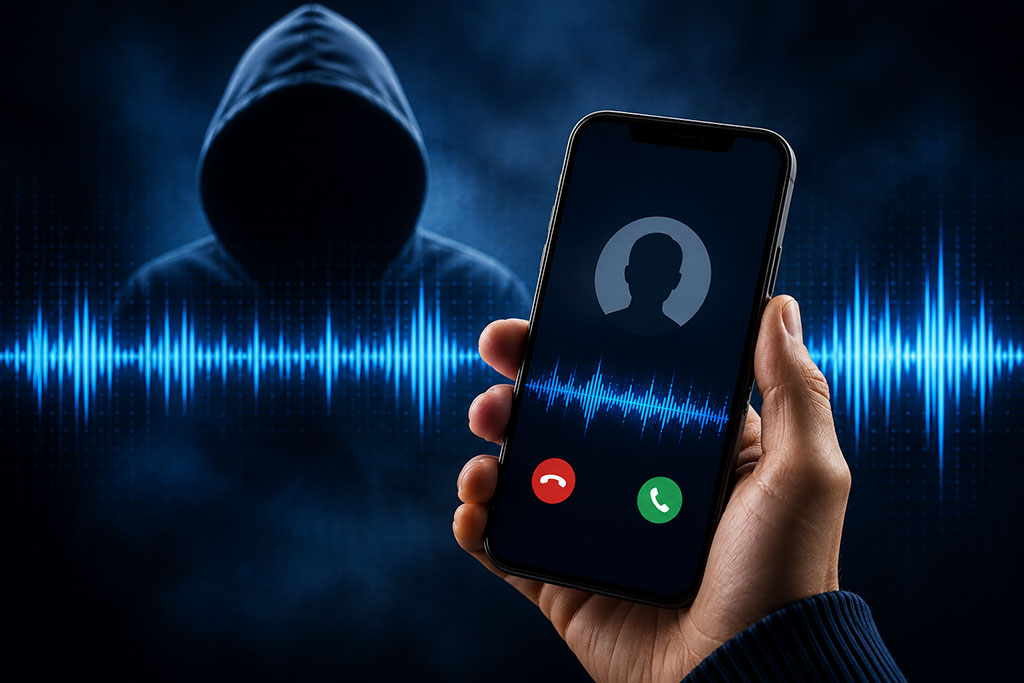
Today’s scam calls do not always start with a stranger’s voice. Instead, you may hear your daughter, your grandson, your spouse, or another loved one sounding panicked and desperate for help. The problem is that the person on the other end of the line may not be your loved one at all.
AI voice cloning scams are a modern evolution of the long-running “grandparent scam,” where criminals impersonate a family member in crisis and ask for money. What has changed is how convincing the scam has become. Thanks to artificial intelligence, scammers can now create realistic copies of someone’s voice with very little audio.
At Citynet, we regularly monitor emerging cybersecurity threats and help educate customers on the latest scams. AI-powered fraud is one of the fastest-growing threats facing consumers today.
How Big Is the Problem?
The FBI’s 2025 Internet Crime Report, released in April 2026, tracked AI-related fraud as a formal crime category for the first time in its nearly 25-year history.
The results were alarming:
- 22,364 complaints related to AI-assisted scams
- More than $893 million in reported losses
Within those figures, distress scams involving family-member impersonation and voice cloning accounted for millions of dollars in confirmed losses and continue to evolve rapidly.
Older adults remain the most frequently targeted group. Americans over age 60 reported approximately $7.7 billion in cybercrime losses during 2025, a 59 percent increase from the previous year.
The Federal Trade Commission (FTC) has also highlighted the growing threat of voice cloning scams. More than 75,000 consumers have signed petitions urging regulators to hold voice cloning platforms accountable for enabling fraud.
How Do These Scams Work?
You do not need to understand artificial intelligence to understand the scam. The process is surprisingly simple.
1. Getting the Voice
Scammers need very little audio to get started. Researchers have found that as little as three seconds of recorded speech can be enough to create a convincing voice clone.
That audio can come from:
- TikTok videos
- Facebook posts
- YouTube videos
- Podcasts
- Voicemail greetings
- Publicly shared recordings
Anything posted publicly online can become source material.
2. Choosing a Target
Scammers often research their victims before making a call.
Social media can reveal family relationships, travel plans, recent events, and other personal details that help make the scam believable.
Older adults are frequently targeted because scammers know they may respond quickly out of concern for a family member.
3. Cloning the Voice
Early versions of these scams relied on prerecorded clips.
Today’s AI tools are far more sophisticated. Voice cloning can now happen in real time during a live phone conversation. A scammer can type responses or use voice-conversion tools that instantly generate speech using the cloned voice.
4. Creating a Crisis
The scam relies on urgency and emotion.
The caller may claim they have:
- Been arrested
- Been involved in an accident
- Been injured
- Encountered a legal emergency
They often ask you not to contact anyone else and may insist on secrecy.
A second caller posing as a lawyer, police officer, bail bondsman, or other authority figure may join the call to add legitimacy and pressure.
Payment requests almost always involve:
- Wire transfers
- Gift cards
- Cryptocurrency
- Cash pickups
These payment methods are difficult or impossible to recover once funds have been sent.
Can You Spot a Fake Voice?
Unfortunately, it is becoming increasingly difficult.
Researchers at UC Berkeley have warned that people cannot consistently identify AI-generated voices by listening alone. In many cases, voice clones are realistic enough to fool family members who know the speaker well.
That means your best defense is not trying to recognize the voice.
Instead, focus on the circumstances surrounding the call.
Warning Signs Include:
- Extreme urgency
- Pressure not to hang up
- Requests for gift cards, wire transfers, cryptocurrency, or cash
- Instructions to keep the situation secret
- Additional callers claiming to be lawyers, police officers, or government officials
If any of these warning signs appear, stop and verify before taking action.
Hang up.
Call the person directly using a number you already have.
Contact another family member.
Reach out to the organization or law enforcement agency involved using publicly listed contact information.
Legitimate emergencies can survive a few minutes of verification.
Create a Family Code Word
One of the most effective ways to protect your family is to establish a shared code word or phrase.
Choose something only your family would know and that would never naturally come up in conversation.
If you receive a distress call from someone claiming to be a loved one, ask them for the code word.
A scammer cannot provide information that was never posted online, shared publicly, or recorded.
Set up your code word today. It takes only a few minutes and could prevent significant financial loss and emotional stress.
Protect Yourself Before the Call Comes
A few proactive steps can reduce your risk:
Review Privacy Settings
Limit public access to videos and recordings on social media whenever possible.
Talk with Older Family Members
Make sure parents, grandparents, and other relatives understand that AI voice cloning exists and that these scams are becoming more sophisticated.
Do Not Share Personal Information
Avoid confirming personal details to unexpected callers.
Be Skeptical of Urgent Requests for Money
Legitimate organizations do not demand immediate payment through gift cards, cryptocurrency, or wire transfers.
What Should You Do If You Become a Victim?
Act quickly.
Contact Your Financial Institution
Immediate action may improve the chances of stopping or recovering a transaction.
Report the Scam to the FTC
Visit ReportFraud.ftc.gov.
File a Complaint with the FBI
Visit IC3.gov.
Contact Local Law Enforcement
A police report may be necessary for insurance claims or financial investigations.
Call the AARP Fraud Watch Network
1-877-908-3360
You do not need to be an AARP member to receive assistance.
Most importantly, do not feel embarrassed. These scams are designed by professionals who exploit trust, emotion, and urgency.
Trust the Process, Not the Voice
AI voice cloning scams are effective because they target our natural instinct to help the people we care about.
The technology will continue to improve, making verification more important than ever.
Take time to discuss these scams with your family, establish a code word, and always verify before sending money or sharing sensitive information.
Citynet is committed to helping our customers stay informed about emerging cybersecurity threats and online scams. By staying aware and taking a few simple precautions, you can help protect yourself and the people you love.