Is My Device Splash-Proof or Waterproof?

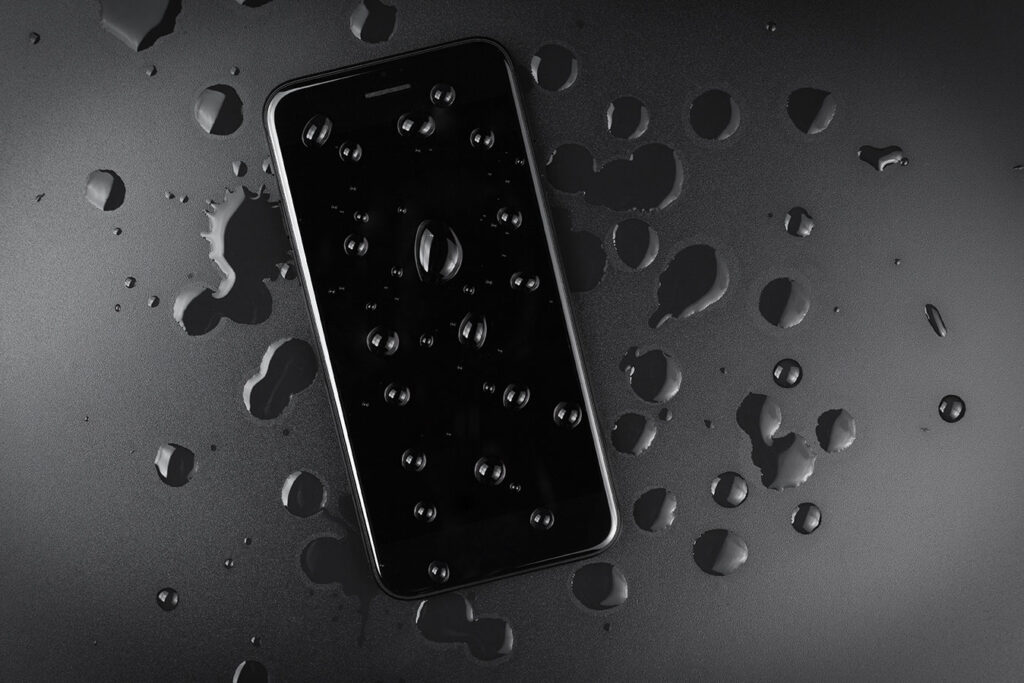
Cell Phone Water Drops Image

Getting to Know IP Ratings.

IP (ingress protection) ratings are a way to measure how well a device is protected from water and dust. They are two-digit codes usually found in a product’s specifications.

The first digit of an IP rating measures protection against dust and other solid objects.

A “0” means the device has no protection, while a “6” (the highest) means it is “dust-tight.” Not all devices receive a rating that covers both variables, especially in consumer electronics, and the “X” is used as a placeholder.

The second digit of an IP rating corresponds to moisture. It also starts at “0” for no protection but goes up to 9, meaning the device should be protected against “high pressure and temperature water jets.”

Here are the three IP indicators that are most relevant for the everyday consumer:

  • IPX4: Protected against splashing water from any direction.
  • IPX7: Protected against temporary immersion up to 1 meter for 30 minutes.
  • IPX8: Protected against immersion up to a specified depth for a specified time.

In short, an IP rating of X7 or higher can be considered waterproof for the purposes of safeguarding your tech from full-but-temporary immersions.

However, it is important to remember that even if your device has an IPX7 rating or above, it might not resist water like it used to once it’s a few years old as gaskets and other materials weaken over time.

So, if you plan on taking your device on a water adventure, it’s always a good idea to check the IP rating and take some precautions. For example, you might want to put your device in a waterproof case or bag. And if it does get wet, avoid the once popular notion of placing it in rice – instead, place the device in a sealed plastic bag with silica packets.

Have fun, and stay safe!

Like This Post?

Facebook
X
LinkedIn
Email

More Posts

WV 811 Dig Image
Fiber

Before You Dig in West Virginia: Why Calling 811 Matters

Spring has arrived in West Virginia, and with it comes a surge of outdoor projects—planting trees, installing fences, landscaping, and home improvements. Before you start digging, there is one step you should never skip: Contact West Virginia 811. It is free. It is simple. And in West Virginia, it is the law. What Is West Virginia 811? West Virginia 811

Fake Permitting Scam Image
The Latest Scams

Scammers Are Targeting Home Projects—Here’s What to Watch

If you’re building, renovating, or improving your home, there’s a new scam you need to watch for—and it’s catching people at exactly the wrong time. How the Scam Works You receive an email that appears to come from a local government office—maybe your city, county, or permitting department. The message claims there’s an issue with your project and that you

Hand Remote Control Image
Fiber

Stop the Buffer: How to Get the Most from Your Streaming Experience

There’s nothing more frustrating than getting to the final seconds of a close game—only to see the spinning buffering wheel right before the winning shot. While buffering is often blamed on slow internet, that’s not always the case—especially if you’re already connected to Citynet Fiber. Your streaming device, settings, and even your home network setup can all impact performance. Here’s

Photography Tips Image
Technology

Phone Photography Tips: Take Better Photos This Spring

Capture Spring Like a Pro — With Just Your Phone Spring is one of the most photogenic times of year—blooming flowers, longer golden-hour light, and weekends filled with moments worth remembering. The best part?You don’t need a $3,000 camera or professional training to capture it all. The phone in your pocket is more powerful than most people realize. With just

Cybersecurity Hacker Hoodie Image
Cybersecurity

How Long Attackers Stay in a Network Before They’re Discovered

When people imagine a cyberattack, they often picture a dramatic event — systems suddenly shutting down or files becoming encrypted. But many cyber incidents don’t unfold that way. In many cases, attackers quietly gain access to a network and remain there for weeks or even months before being discovered. This period is known as “dwell time.” During this time, attackers

Cybersecurity Alert Critical Image
Cybersecurity

5 Critical Mistakes to Avoid During a Cyberattack

Think your business may already be compromised? See the warning signs and response steps here Even well-intentioned actions can make a cyber incident worse Cyberattacks often unfold quickly, and the wrong response in the first few minutes can make an incident far more difficult to contain and investigate. When a cyber incident occurs, the natural reaction is to act quickly

SuperPod with WiFi 6E

Plume SuperPod WiFi 6E Specs

SuperPod with WiFi 6

Plume SuperPod WiFi 6 Specs

SuperPod

Plume SuperPod Secs